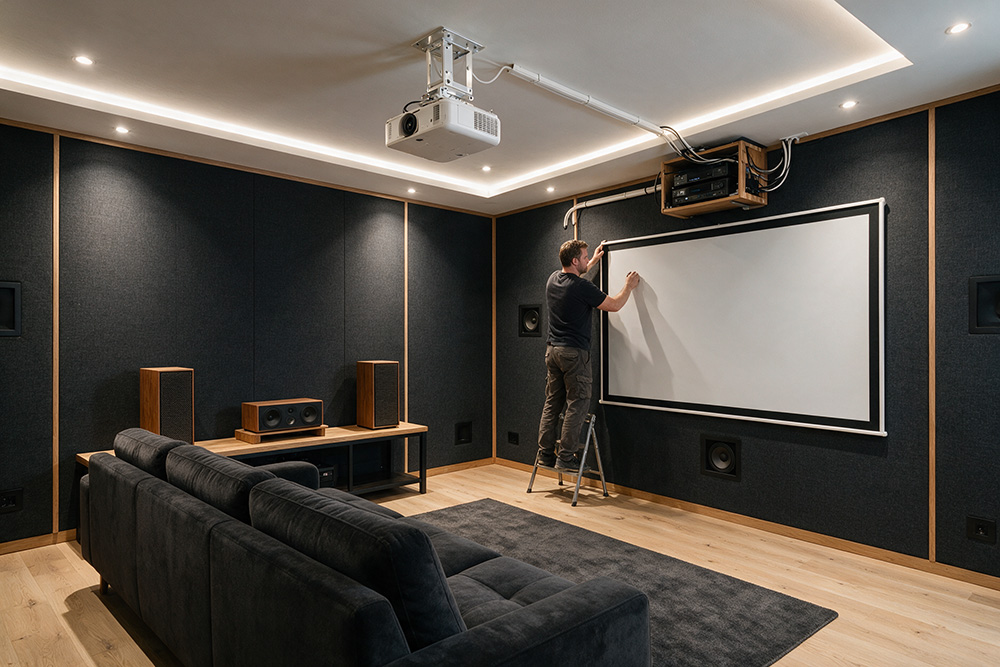
Most people researching a home theater room have a clear picture of the finished product and very little visibility into what the process of getting there looks like. The gap between "I want a dedicated theater space" and walking into a calibrated, fully operational room is wider than most expect, and understanding each phase helps set realistic expectations for timeline, decisions, and cost. Contact Axiom Integration at (407) 775-2222 to start a conversation about your space before any commitments are made.
What happens before a client even commits to a project?
The design process starts before anything is signed. For a home theater project, Axiom Integration begins with a quote that presents several options: different equipment configurations at different price points, and design concepts that work within the physical parameters of the actual space. The goal is for a client to make a genuinely informed decision about what they are committing to, rather than discovering options after the fact that would have changed their choice. Explore theater design options to see examples of what that early design conversation covers.
This pre-project design phase is where the room's fundamental character is determined: screen size relative to viewing distance, speaker placement for the acoustic experience, seating configuration, and the aesthetic treatments that make the room feel like a dedicated cinema rather than a living room with a big television. Getting these decisions right before construction begins is significantly less expensive than revisiting them after walls are closed.
What does the construction phase involve?
Once a design is settled on, construction begins. Depending on the project and the client's existing resources, Axiom Integration works either with the client's own construction team or brings its own team to handle the build-out. For a new theater room, this phase typically involves framing adjustments, electrical rough-in for equipment and lighting circuits, conduit runs for audio and video cabling, and any structural modifications that the design requires.
Demolition of an existing space, if the theater is going into a room that previously served another purpose, is handled before the new build-out begins. This phase is the one with the most visible disruption to the home, and its duration depends heavily on the scope of what is being built. A conversion of an existing room into a theater involves less structural work than a full custom build in an unfinished basement space.
What happens when construction is complete and installation begins?
Equipment installation starts once the construction phase is signed off. This is where the physical hardware, projector or display, speakers, amplifiers, receivers, acoustic panels, and the control system come into the space and get positioned and connected according to the design. Acoustical treatments, the panels and materials that shape how sound behaves in the room, go in during this phase as well, alongside the design features that give the room its finished look.
Throughout installation, decisions arise that require the homeowner's input. The design accounts for the major choices upfront, but a physical installation in a real space occasionally surfaces questions that the design drawings did not fully resolve: exactly where a particular element lands on a wall, how a cable run is managed through a finished area, whether a lighting placement looks right in the actual room. Axiom Integration addresses those questions in real time rather than making assumptions and moving forward. Ask about the installation process to understand the typical decision points for a project like yours.
What is the audio and video tuneup, and why does it happen at the end?
Once the physical installation is complete, the room goes through a calibration process before the client sees the finished product. Audio calibration adjusts speaker levels, delay timing, and equalization to account for the specific acoustic properties of the room, because every room behaves differently and factory settings do not reflect how a speaker will perform in a particular space. Video calibration sets the display's color, contrast, and brightness to match the ambient light conditions and viewing characteristics of the room.
This tuneup phase is what separates a room where the equipment is installed from a room where the equipment performs. Two theater rooms with identical hardware can sound and look substantially different based on whether they have been properly calibrated. Skipping this step is one of the most common ways a home theater fails to deliver on the investment made in the equipment.
What does the client handoff look like?
The final step is training. Once the system is calibrated and performing correctly, the client is brought into the space and walked through the operation of everything in the room. The control system, how it manages every component with a single interface, the sources, the lighting scenes, the acoustic settings for different types of content: all of it gets covered until the client has a genuine comfort with using the room independently.
The goal at handoff is not just a delivered product. It is a client who knows how to use it and can get the experience they paid for from day one. Contact Axiom Integration at (407) 775-2222 to start the design conversation for your theater project.