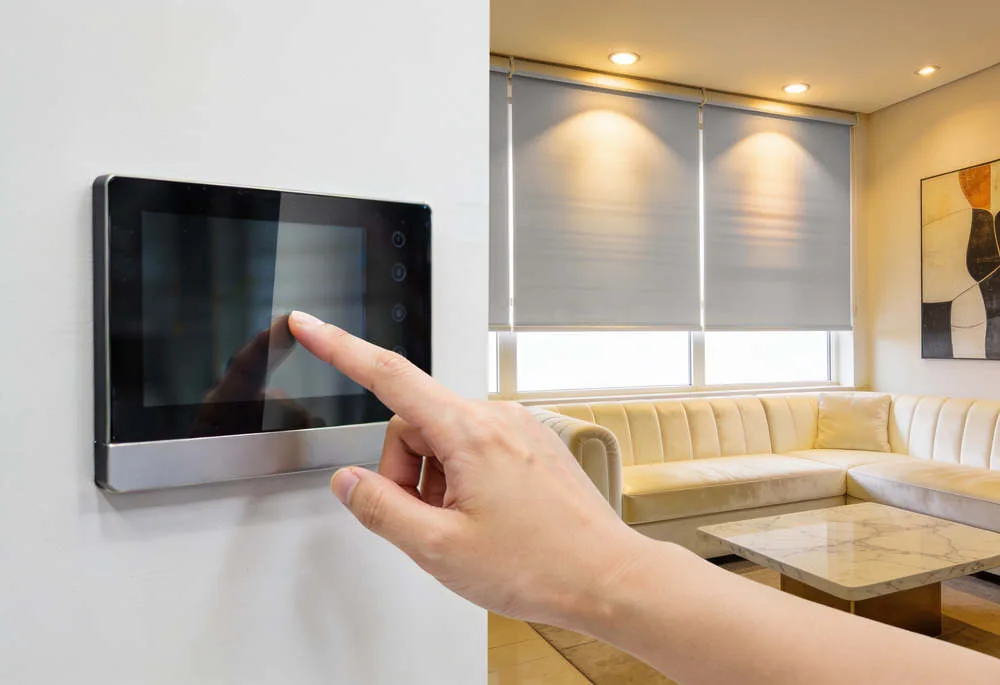
For many homeowners, integrating audio, lighting, shades, climate, and security into one system is worth it because it replaces scattered apps and remotes with a consistent way to control the property. The value comes from reliability and simplicity, not from adding technology for its own sake. In a connected home near Wekiwa Springs State Park, one command can prepare several rooms without asking the family to manage each device separately.
Call Axiom Integration at (407) 775-2222, or schedule an in-home consultation with Axiom Integration to see what should be integrated and what can remain independent. Homes around Lake Eola vary widely in size and construction, so the right system begins with the property rather than a standard equipment package.
A residence near Park Avenue in Winter Park may need coordinated lighting and shades for entertaining, distributed music across several zones, or simple control of cameras and HVAC from one interface. The investment makes sense when the design removes daily friction and fits the way the home is actually used.
What one-touch control changes day to day
A centralized system can replace a stack of remotes and a phone full of separate apps. Instead of opening one app for music, another for lighting, and another for shades, the homeowner uses a shared interface designed around rooms and common activities.
One touch might start music in the kitchen, adjust nearby lights, and lower the window treatments. A voice command can trigger a prepared scene when hands are full. At night, a single action may shut down entertainment equipment, change selected lighting, and adjust other connected systems according to the approved design.
The goal is not to automate every possible action. It is to make repeated tasks easier and keep control predictable for everyone in the home.
Audio becomes part of the house instead of a separate project
Whole-home audio works best when it is planned by zone. The kitchen may need background music, while an outdoor area needs independent volume and source control. Bedrooms and workspaces may have different priorities.
When audio shares the same control environment as lighting and other systems, homeowners do not need to remember which remote belongs to which room. They can choose an area, select what they want to hear, and make adjustments from a familiar interface.
Lighting and shades work better when coordinated
Professional lighting contols can create scenes for arrival, entertaining, movie time, or the end of the day. The benefit is not limited to dimming. A planned lighting system can reduce wall clutter and make several fixtures respond together instead of requiring a walk around the room.
Automated window treatments can coordinate with those scenes. Shades may be adjusted for glare, privacy, heat, or a preferred room atmosphere without becoming another isolated system to manage.
The design still needs manual control. Homeowners should be able to make a quick change without searching through complicated menus or waiting for a routine to run.
Centralized control is becoming more practical in 2026
Control platforms increasingly bring entertainment, lighting, shades, climate, and security into one interface. Control4 describes personalized scenes and whole-home control through touchscreens, remotes, mobile devices, keypads, and voice commands. AVA also supports control of lighting, shades, music, climate, and other connected systems through its control environment.
Routines are becoming more responsive too. A system may act according to time of day, selected scenes, sensor events, or established household patterns when the design and connected equipment support it. Those routines should remain understandable and easy to override.
Automation feels useful when it quietly follows the household. It feels expensive when residents have to fight it.
The network is what keeps everything dependable
A polished interface cannot compensate for weak infrastructure. The owner's point is direct: every connected device relies on a strong, continuous, uninterrupted network connection.
Stationary devices should be hardwired when possible. Managed switches, structured cabling, and well-placed access points give the control system a stable foundation. Portable devices can stay on Wi-Fi, but fixed equipment should not compete for wireless capacity when an Ethernet connection is available.
This is especially important for home automation because a network interruption can affect more than one feature at a time. Lighting may still work from a wall switch, yet remote control, audio distribution, cameras, or coordinated scenes may become unreliable.
A tailored system can be smaller than you think
Whole-home integration does not require automating every room at once. A thoughtful first phase may focus on the spaces used most often, the systems causing the most frustration, or the infrastructure needed for later expansion.
That budget-aware approach protects the parts of the project that matter. Reliable networking, clear interfaces, and sound system design should come before novelty. Additional rooms or functions can be considered once the foundation is right.
The question is not whether every device can be connected. It is whether connecting it will make the home easier to operate.
Axiom starts with an in-home survey
Axiom Integration is not a one-size-fits-all integrator. Each project begins with an in-home survey that considers the client's goals, existing equipment, construction, daily routines, and budget.
Once the design is agreed on, Axiom can use Control4 and AVA control systems as appropriate to coordinate lighting, window treatments, camera systems, HVAC, and distributed audio and video across zones. Clients with a clear vision can bring their ideas. Those who are unsure can work through the options before drawings and a tailored design are prepared.
Call Axiom Integration at (407) 775-2222, or book a tailored in-home consultation with Axiom Integration to scope a whole-home system that fits your Central Florida property, priorities, and budget.